by Charlene Laino from WebMD
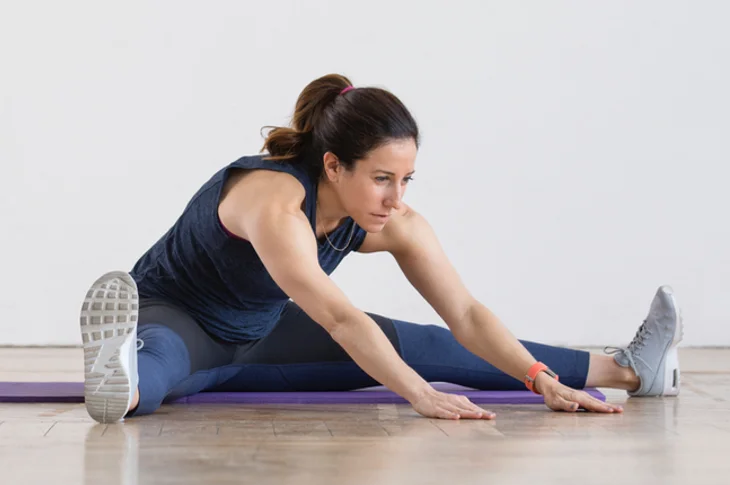
Preliminary research calls into question the old adage that stretching improves flexibility more than resistance training. "Our results suggest that full-range resistance training regimens can improve flexibility as well as, or perhaps better than, typical static stretching regimens," says James R. Whitehead, EdD, of the University of North Dakota in Grand Forks.
11 Benefits of Strength Training That Have Nothing to Do With Muscle
Excerpt from a U.S. News and World Report
"A lot of people believe that if they don't want to look like a bodybuilder, they shouldn't perform resistance training," says Michael Rebold, Director of Integrative Exercise Sciences at Hiram College in Ohio. "So the only form of exercise they do is aerobic – and then they wonder why they are having trouble making significant improvements in their health…building muscle bulk requires specialized and intense training and nutrition, and it doesn't happen on accident,” Rebold adds.
Before your next workout, consider these 11 science-backed benefits of strength training:
Inroad Theory of Exercise
by Dr. Doug McGuff
The most time-efficient and productive exercise program is one based upon the principles of High-Intensity Training (H.I.T.) Productive exercise must be of a threshold level of intensity, as any level below this threshold will not stimulate maximal results. As a result, H.I.T. exercise sessions will be comparatively brief and infrequently performed (as opposed to conventional exercise sessions).
Stay Strong to Increase Longevity
From a study in Medicine & Science in Sports & Exercise
Researchers from China and Indiana University analyzed data from 4,449 adults in the National Health and Nutrition Examination Survey and found that older people with low muscle strength had more than twice the risk of dying during the study than those with normal muscle strength.
Muscle Loss As You Age
From WebMD.com
From the time you are born to around the time you turn 30, your muscles grow larger and stronger. But at some point in your 30s, you start to lose muscle mass and function. The cause is sarcopenia with aging. Physically inactive people can lose as much as 3% to 5% of their muscle mass each decade after age 30. Even if you are active, you’ll still have some muscle loss.
SuperSlow Exercise
Building Strength Fast by Going Slow
From Bloomberg BusinessWeek
After dentist Steven Kafko, 53, had surgery on two vertebrae in his neck, doctors told him he would have to avoid strenuous activity for the rest of his life—and definitely no weight-lifting. But after reviewing the slow-motion strength training offered at New York’s InForm Fitness, “My neurosurgeon is thrilled that I’m doing this, because it is so safe and effective,” says Kafko. In three months, he says, he has gained 1-1/2 inches in his chest and lost 1-1/2 inches in his waist.
Brief Workouts Produce Significant Strength Gains
From The Medium.com
Strength training is one of the most efficient, healthiest, and anti-aging of all exercises. Virtually everyone should be training for strength. Many people have the mistaken idea that they must spend long hours in the gym to build up muscle and strength, and this belief stops them from beginning a strength-training program.